North Carolina Truck Accident Lawyer

If you or a loved one has been injured in a collision with a commercial truck, working with an experienced North Carolina truck accident lawyer is critical. Truck accidents in North Carolina often involve catastrophic injuries, complex liability issues, and aggressive trucking insurance companies. Understanding the state-specific laws, deadlines, and unique trucking risks can make a meaningful difference in the outcome of your case.

If you or a loved one has been injured in a collision with a commercial truck, working with an experienced North Carolina truck accident lawyer is critical. Truck accidents in North Carolina often involve catastrophic injuries, complex liability issues, and aggressive trucking insurance companies. Understanding the state-specific laws, deadlines, and unique trucking risks can make a meaningful difference in the outcome of your case.

Below is a comprehensive guide to truck accident claims in North Carolina, written to help victims and families protect their rights.
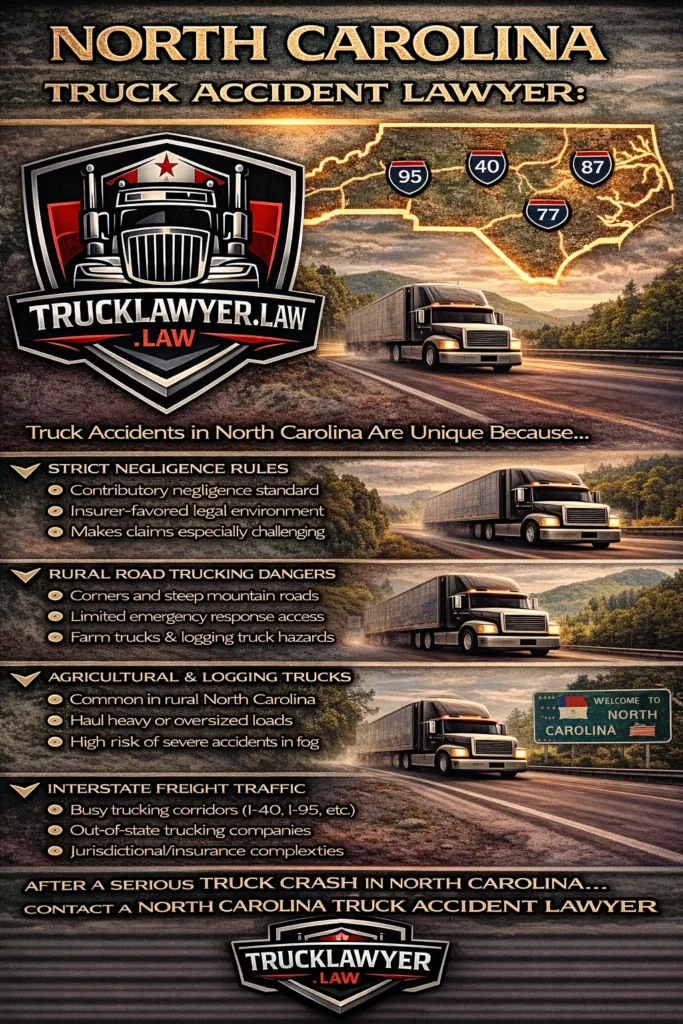

Vertical infographic titled “North Carolina Truck Accident Lawyer” featuring the TruckLawyer.Law logo, a map of North Carolina highlighting major trucking corridors (I-40, I-95, I-77, and I-87), and visuals of semi-trucks on highways. The infographic summarizes unique aspects of North Carolina truck accidents, including strict contributory negligence laws, rural road and mountain driving dangers, agricultural and logging truck risks, and heavy interstate freight traffic, with a call to contact a North Carolina truck accident lawyer.

Why Truck Accidents in North Carolina Are So Serious

North Carolina is a major transportation hub for the East Coast. Commercial trucks travel through the state daily, hauling goods between ports, distribution centers, and neighboring states. The combination of heavy truck traffic, high-speed interstates, rural roads, and dense metro areas creates a heightened risk of devastating crashes.

Truck accident cases are fundamentally different from standard car accidents due to:

  • The size and weight of commercial trucks
  • Federal trucking regulations
  • Multiple potentially liable parties
  • High-value insurance policies
  • Severe and often permanent injuries

North Carolina Truck Accident Laws That Impact Your Case

Contributory Negligence Rule

North Carolina follows a pure contributory negligence standard—one of the strictest in the country. If an injured person is found even 1% at fault, they may be barred from recovering compensation entirely.

This makes it especially important to work with a North Carolina truck accident lawyer who can:

  • Conduct an independent investigation
  • Preserve black box and logbook evidence
  • Challenge attempts by insurers to shift blame

Liability in Truck Accident Cases

Depending on the facts, liability may extend beyond the truck driver to include:

  • The trucking company
  • Cargo loaders or shippers
  • Vehicle or parts manufacturers
  • Maintenance contractors
  • Third-party logistics companies

Federal Motor Carrier Safety Administration (FMCSA) regulations often play a key role in establishing negligence.


Statute of Limitations for Truck Accidents in North Carolina

Time limits are strict in North Carolina truck accident cases:

  • Personal Injury: 3 years from the date of the accident
  • Wrongful Death: 2 years from the date of death

Failing to file within the applicable statute of limitations can permanently bar your claim. Early legal involvement also helps preserve critical evidence that trucking companies may otherwise destroy.


Major Trucking Corridors and Highways in North Carolina

North Carolina’s extensive highway system supports heavy commercial traffic. High-risk trucking routes include:

  • I-40: Crosses the state east to west, connecting Wilmington, Raleigh, Greensboro, and Asheville
  • I-95: A major East Coast trucking artery running through eastern North Carolina
  • I-85: Serves Charlotte, Greensboro, and the Piedmont Triad
  • I-77: Connects Charlotte to Virginia and West Virginia
  • I-26: Heavily used by freight traffic in western North Carolina

Ports in Wilmington and Morehead City, along with large distribution hubs around Charlotte and the Research Triangle, further increase commercial truck volume.


What Makes Truck Accidents in North Carolina Unique

Several factors make truck accident claims in North Carolina particularly complex:

  • Strict contributory negligence laws favor insurance companies
  • Rural road trucking accidents often involve higher speeds and delayed emergency response
  • Agricultural and logging trucks create unique hazards in rural areas
  • Weather-related risks, including heavy rain and fog in mountain regions
  • Interstate freight traffic, increasing the likelihood of out-of-state trucking companies

Because of these challenges, victims often face intense pressure to settle quickly for less than their case is worth.


How a North Carolina Truck Accident Lawyer Can Help

A dedicated North Carolina truck accident lawyer can:

  • Investigate FMCSA violations
  • Identify all liable parties
  • Work with accident reconstruction experts
  • Handle communications with trucking insurers
  • Pursue full compensation for medical bills, lost income, pain and suffering, and wrongful death damages

Truck accident claims are not cases victims should attempt to handle alone.


Truck accidents in Illinois involve unique challenges, including massive freight traffic, extreme congestion, harsh weather, and powerful trucking companies. Victims deserve representation that understands Illinois law, federal trucking regulations, and the realities of commercial transportation in the Midwest.

Talk to a North Carolina Truck Accident Lawyer Today

If you were injured—or lost a loved one—in a commercial truck crash, time is critical. Evidence disappears quickly, and North Carolina’s strict negligence rules leave little room for error. Speaking with a qualified North Carolina truck accident lawyer can help protect your rights and level the playing field against powerful trucking companies.

Contact us today for a free case evaluation!


Sources

  1. North Carolina General Statutes – Civil Statute of Limitations
    Explains filing deadlines for personal injury and wrongful death claims.
    https://www.ncleg.gov/Laws/GeneralStatuteSections/Chapter1
  2. Federal Motor Carrier Safety Administration (FMCSA)
    Provides federal trucking safety regulations that govern commercial drivers and carriers.
    https://www.fmcsa.dot.gov/regulations
  3. North Carolina Department of Transportation (NCDOT)
    Offers data on major highways, freight corridors, and commercial traffic patterns.
    https://www.ncdot.gov